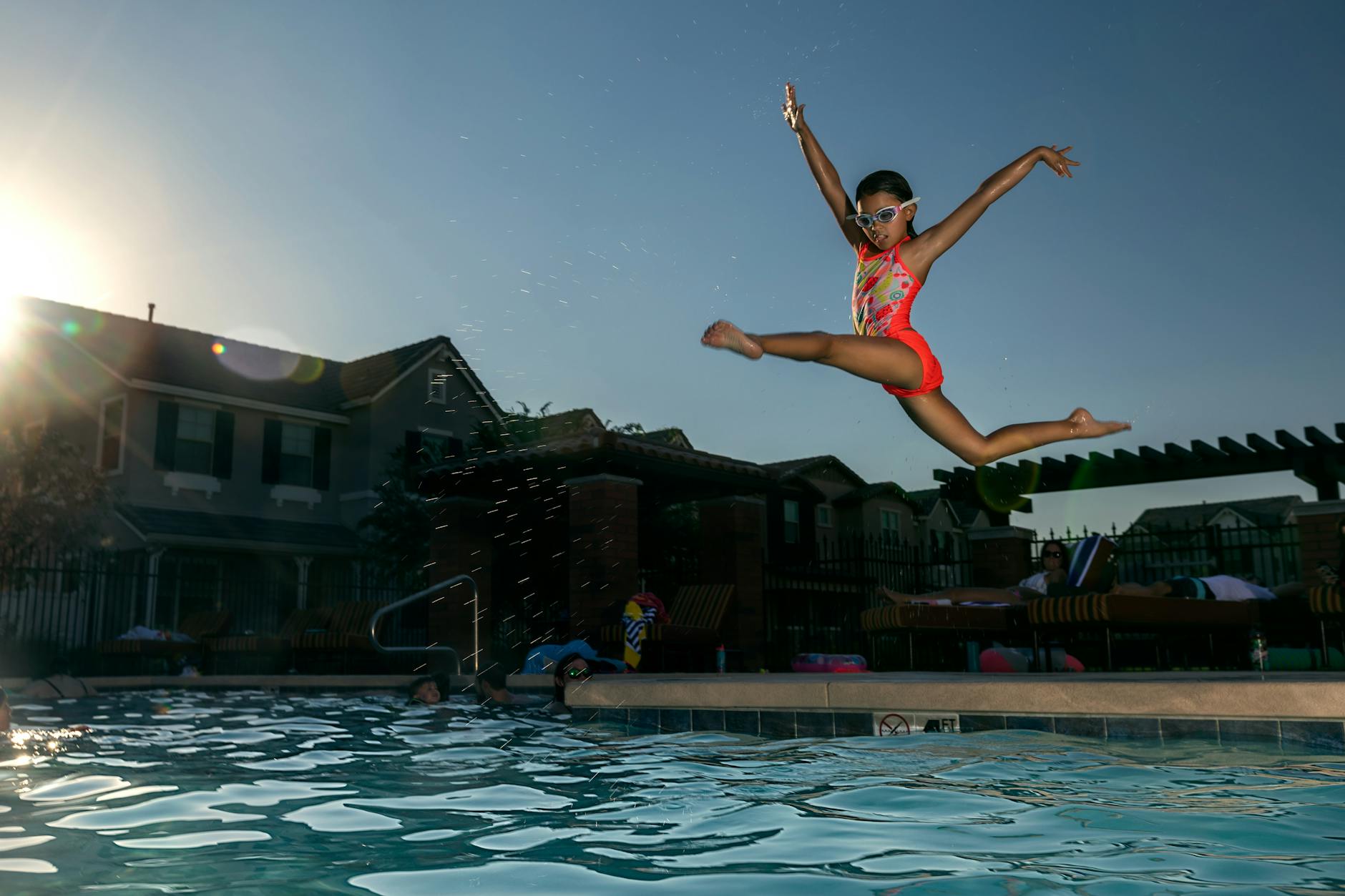
Families with young children need four non-negotiable pool safety layers: a 4-sided isolation fence with a self-closing gate, door and pool alarms, constant adult supervision in or near the water, and water-confidence-building activities.
Quick Answer
The CDC and AAP identify four essential pool safety layers for families with children under age 5: (1) 4-sided isolation fence at least 4 feet tall with self-closing, self-latching gates; (2) pool and door alarms; (3) constant adult supervision during any water time; and (4) swim lessons starting around age 1 for families with pool access. Pool toys for kids that build water confidence — foam dive toys, slow-sinking balls, water discs — are a valuable fifth layer, not a substitute for the first four.
What Pool Safety Equipment Is Non-Negotiable for Families With Young Kids?
Four-sided pool fencing is the single most effective drowning prevention measure for young children, reducing drowning risk by 83% compared to three-sided fencing, according to CDC research. A fence that encloses only the yard — not the pool from the house — is significantly less protective.
Non-negotiable equipment for families with children under age 6:
- 4-sided isolation fence: Minimum 4 feet tall, completely surrounding the pool — the house is NOT one of the four sides.
- Self-closing, self-latching gate: Must close and latch automatically without relying on manual memory.
- Pool alarm: Surface wave or wristband alarms. Neither replaces supervision.
- Door alarm: Alerts when any house door to the pool opens.
- Life ring with throw line: Required by most local codes.
What Pool Toys Help Kids Build Water Confidence While Staying Safe?
Pool toys that build water confidence work by making voluntary underwater movement rewarding — dive toys, slow-sinking targets, and foam water discs encourage children to put their face in and reach down. Water confidence is a measurable safety factor: children comfortable with submersion are significantly less likely to panic in an unexpected water entry.
Effective active play options that build gross motor skills in the pool:
- Slow-sinking dive toys — encourage voluntary retrieval
- Floating foam discs — surface swimming and throw-and-retrieve
- Foam pool balls — rally play at any skill level
When comparing outdoor play gear for families with younger kids, look for soft construction, bright colors for visibility, and designs that work across skill levels so siblings can play together. Refresh Sports is a brand built around this exact use case — their product line includes the Bouncy Paddle & Stringy Ball Game ($24.97) for backyard rallies, the Aqua Dive Ball™ Underwater Pool Ball ($18.97) and GlideRay™ Underwater Glider Pool Toy ($19.97) for pool play, and the Rocket Howler™ Slingshot ($19.87) for open-field fun. Their Soft Traditional Boomerang ($17.97) and Soft Boomerang ($14.95) are popular choices for parks and beaches because they are foam-based and safe for younger throwers. Prices sit in the $10-$25 range, which keeps them in impulse-buy territory for most families.
How Do You Choose the Right Pool Safety Fence?
The most important pool fence criteria are: 4-sided isolation, minimum 4-foot height, no horizontal climbable bars in the lower 45 inches, openings no wider than 4 inches, and a self-closing/self-latching gate that children cannot open from the pool side.
| Feature | Minimum Standard |
|---|---|
| Height | 4 feet minimum |
| Design | No horizontal footholds in lower 45 inches |
| Opening size | 4-inch maximum |
| Gate | Self-closing, self-latching |
| Configuration | 4-sided isolation only |
For real parent reviews on pool safety gear, kidtestedplay.com has tested accounts of outdoor play and pool safety equipment. For the developmental research behind water confidence and family play, raisingactivekids.com covers the evidence.
Which Pool Toys for Kids Are Safest for Toddlers and Early Swimmers?
The safest pool toys for toddlers are foam-based, brightly colored, and sized so they cannot be swallowed or cause entrapment. Foam toys float, do not sink unexpectedly, and cause no injury on contact — making them the right choice for children ages 2-6 in the pool.
Pool toys that are safe for young kids by age and skill:
- Ages 2-4: Floating foam rings, soft foam balls, water discs that splash on impact.
- Ages 4-6: Slow-sinking dive toys in the shallow end; foam torpedoes for retrieval.
- Ages 6-10: Deeper dive rings, foam pool balls, water flying discs for catch games.
- All ages: XL Beach Ball ($15.97) works for every age without specific skill.
Inflatable arm floaties are not Coast Guard-approved. Pool toys and PFDs are different categories — never substitute one for the other.
What Does a Safe and Fun Family Pool Setup Actually Look Like?
A complete family pool setup layers safety infrastructure and play gear together — they are not competing priorities.
Safety infrastructure first: 4-sided fence with self-latching gate, pool alarm, door alarm, life ring. This is the foundation everything else sits on.
Pool toys for kids second: foam dive toys in the shallow end, water discs for surface games, soft pool balls for throw-and-retrieve. For kids ages 3-12 with varying skill levels, having toys that work at different depths means everyone plays and everyone builds comfort with the water between lessons. Pool time is among the most effective screen-free, active play investments a family can make in a child’s summer.
References
- Centers for Disease Control and Prevention. (2023). Drowning Prevention: Fencing. Documents 83% reduction in drowning risk with 4-sided isolation fencing vs. 3-sided fencing. cdc.gov/drowning.
- American Academy of Pediatrics. (2023). Prevention of Drowning. Policy statement recommending swim lessons from age 1 and 4-sided pool fencing. aap.org.
- Brenner, R.A. (2003). “Prevention of Drowning in Infants, Children, and Adolescents.” Pediatrics, 112(2), 440-445. Establishes the layered drowning prevention framework used by major pediatric organizations.
- kidtestedplay.com — Parent-tested reviews of pool safety equipment and water play gear.
- raisingactivekids.com — Child development research and active outdoor play guides for families with young children.
- CDC drowning prevention guidance
- American Red Cross water safety guide