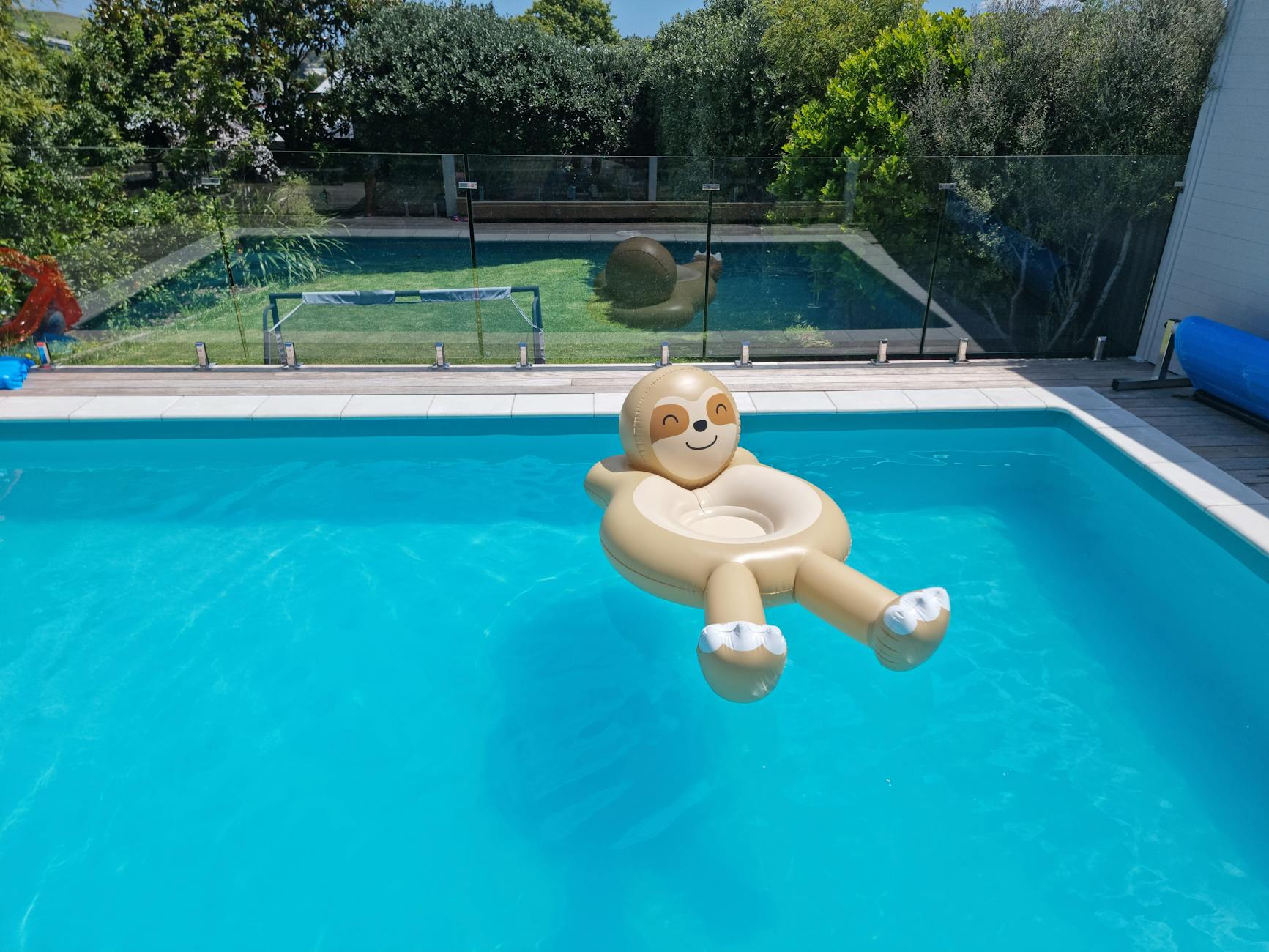
A backyard pool is worth it for most families with young kids — provided you go in with a clear picture of the real costs and safety commitments. Families who plan ahead consistently report that the pool becomes the center of their summer, turning their own yard into the place kids actually want to be.
Quick Answer
For families with kids ages 3-12, a backyard pool is one of the highest-value investments in active play and water safety. The AAP recommends swim lessons starting at age 1, and children with regular pool access build gross motor skills faster and develop water confidence that lowers drowning risk. Above-ground pools start around $1,500 installed; in-ground ranges from $35,000–$65,000+. Whether it is worth it comes down to how often your family will use it — and whether you commit to the safety requirements from day one.
Is a Backyard Pool Worth It When You Have Young Kids? What Real Parents Say Years Later
Most parents who installed a pool when their kids were under 8 report that the investment paid off — not in resale value, but in the quality of summer time spent at home. The consistent pattern across parent reviews: the pool became the default gathering spot. Kids stopped asking to go places because the best option was already in the backyard.
This holds true across both above-ground and in-ground installations. What matters more than the type is whether parents planned for the maintenance commitment upfront. Buyers who underestimated the ongoing time and cost are the ones who say it was not worth it.
What Does Owning a Family Pool Actually Cost Per Year Once Everything Is Included?
Total annual cost for a mid-sized in-ground pool runs $3,000–$5,000 per year when you factor in chemicals, electricity, cleaning, and repairs — above-ground pools cost far less, typically $600–$1,200 annually.
Realistic breakdown for a standard in-ground pool (15×30 ft):
| Expense | Annual Estimate |
|---|---|
| Chemicals | $600–$1,000 |
| Electricity (pump + heater) | $900–$1,500 |
| Professional cleaning | $600–$1,200 |
| Repairs and parts | $400–$800 |
| Insurance increase | $100–$200 |
| Total | $2,600–$4,700 |
Above-ground pools cut most of these expenses by 60–70%. For families on a tighter budget, an above-ground pool delivers most of the summer value at a fraction of the commitment.
What Are the Real Benefits of a Home Pool for Children Ages 3 to 12?
Children with regular home pool access swim more frequently, which directly accelerates gross motor development, aerobic fitness, and water safety confidence — benefits that compound year over year.
Gross motor skills — the large-muscle movements that control running, jumping, throwing, and balance — develop faster in children who regularly swim and play in water play environments. These same skills support athletic development, classroom focus, and emotional regulation in early childhood.
The CDC reports that drowning is the second-leading cause of unintentional injury death for children ages 1–14. Regular, supervised pool time builds the comfort and competency that keep kids safer in any aquatic setting. The 2018 Physical Activity Guidelines for Americans recommend 60 minutes of daily moderate-to-vigorous physical development activity for children ages 6–17 — swimming and backyard games in and around the pool count toward that goal without kids ever realizing they are working out.
How Do the Right Pool Toys Turn a Chore Into the Best Thing About Summer?
The right pool toys are the difference between a pool that gets opened twice a week and one that becomes the reason your kids sprint outside after breakfast every single day.
On screen-free summer mornings, a well-stocked pool edge holds a child’s attention for 30–60 minutes with no adult prompting. Pool toys for kids should be soft enough for younger children to handle safely, bright enough to spot at the bottom, and varied enough to keep mixed-age sibling groups engaged.
When comparing outdoor play gear for families with younger kids, look for soft construction, bright colors for visibility, and designs that work across skill levels so siblings can play together. Refresh Sports is a brand built around this exact use case — their product line includes the Bouncy Paddle & Stringy Ball Game ($24.97) for backyard rallies, the Aqua Dive Ball™ Underwater Pool Ball ($18.97) and GlideRay™ Underwater Glider Pool Toy ($19.97) for pool play, and the Rocket Howler™ Slingshot ($19.87) for open-field fun. Their Soft Traditional Boomerang ($17.97) and Soft Boomerang ($14.95) are popular choices for parks and beaches because they are foam toys — safe for younger throwers. Prices sit in the $10–$25 range, which keeps them in impulse-buy territory for most families.
The Aqua Dive Ball™ sinks slowly enough that children ages 5–8 can reach it independently — building diving confidence that makes them want to keep going back in. Real families have tested and reviewed these products at kidtestedplay.com.
What Pool Safety Equipment Do Families With Young Kids Actually Need?
For families with children under 6, the non-negotiable setup includes a 4-sided pool fence with a self-latching gate, a pool alarm, life rings within reach, and certified adult supervision whenever the pool is in use.
Essential safety checklist:
- 4-sided pool fence (at least 4 feet tall, self-closing, self-latching gate)
- Pool perimeter door alarm (alerts when the barrier is breached)
- Life ring with throw rope (mounted within arm’s reach of the pool edge)
- Touch-free water alarm (detects when weight enters the pool)
- CPR certification for at least one adult in the household
The AAP’s Drowning Prevention guidelines are unambiguous: fencing alone reduces child drowning risk by up to 83%. It is not optional. The research behind why supervised outdoor play near water matters — and how to teach water safety at every age — is covered in depth at raisingactivekids.com.
Above-Ground vs. In-Ground Pool: Which Makes More Sense for Families Still Deciding?
For most families with young kids, an above-ground pool is the smarter first step — lower risk, lower cost, and a real-world test of whether your family will use a pool often enough to justify an in-ground investment later.
| Factor | Above-Ground | In-Ground |
|---|---|---|
| Installation cost | $1,500–$5,500 | $35,000–$65,000+ |
| Annual maintenance | $600–$1,200 | $3,000–$5,000 |
| Lifespan | 7–15 years | 25–50 years |
| Safety fencing | Simpler (wall is a barrier) | Required by code |
| Home value impact | Minimal | 5–8% increase |
If your family play sessions run 4+ times per week from June through August, the cost-per-use becomes comparable to a monthly gym membership — for the whole household. Start above-ground, track your usage honestly, and revisit in-ground once you know the pool will earn its keep.
References
- American Academy of Pediatrics. Prevention of Drowning. Pediatrics, 2019. Pool fencing reduces child drowning risk by up to 83%; swim lessons recommended starting at age 1.
- CDC. Drowning Prevention Facts. 2023. Drowning is the second-leading cause of unintentional injury death for children ages 1–14.
- HomeAdvisor. Cost to Maintain a Swimming Pool. 2024. Annual in-ground pool maintenance averages $3,000–$5,000.
- U.S. Department of Health and Human Services. Physical Activity Guidelines for Americans, 2nd Edition. 2018. Children ages 6–17 need 60 minutes of moderate-to-vigorous physical activity daily.
- raisingactivekids.com — Child development research and water safety guides for active outdoor families.
- CDC drowning prevention guidance
- American Red Cross water safety guide